Nobody reads this
but you
A journal is only useful if you're honest in it, and you're only honest in it if you trust where it goes. Here is exactly what happens to what you write.
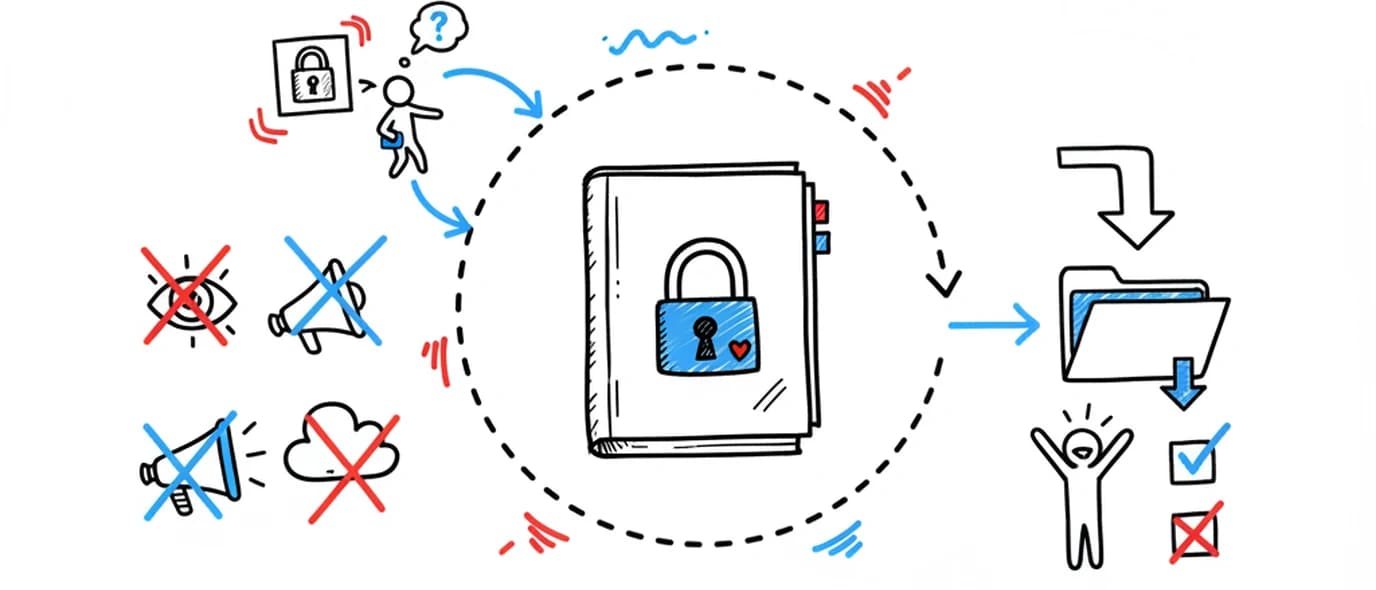
Three Pages Daily has no public feed, no social layer and no way for another user to reach your pages.
Writing is never used to train AI models, there are no ads, and content is not sold. Pages are encrypted in transit and at rest — but not end-to-end, so the service can technically access stored content. Export to Markdown or PDF is available on every plan, including the free one.
Private by architecture, not by setting
There is no privacy toggle to find, because there is no version of this where your writing is visible to anyone else by default.
No feed, no followers
Nothing to accidentally publish. There is no social surface in the product at all.
Never used for AI training
Your entries are not training data, and there is no model being fitted on what you write.
No ads, nothing sold
The business model is the subscription. Your content isn't the product.
Encrypted in transit and at rest
Standard transport and storage encryption — though not end-to-end. We say so plainly.
You can take it all with you
Export is on the free plan, not held back as a retention lever. A journal you can't leave with isn't really yours.
Markdown export
Your whole journal as a ZIP of Markdown files — readable in any text editor, forever.
PDF export
A single page, or the whole archive, as PDFs you can print or file somewhere else.
Free plan included
Export isn't a Premium feature. Premium adds batch export, not the right to your words.
Downgrade safely
Going back to free keeps everything you wrote readable, searchable and exportable.
What we won't claim
Privacy pages are where products overstate things. These are the limits, stated up front.
It isn't end-to-end encrypted
Encrypted in transit and at rest, yes. E2EE, no — the server can access stored content, which is what makes sync and search work. If E2EE is non-negotiable, pick a tool built for it.
There's no second lock screen
Your account sign-in is the protection. There isn't a separate journal passcode or biometric lock on top, so a shared unlocked device is a shared journal.
It needs a connection
Typing is written to a local draft on your device first, which protects the sentence you're in the middle of. Lasting backup still requires being online.
Compared with journaling in a notes app
Apple Notes and Google Keep are private enough for most people. The differences show up around what surrounds the writing.
Frequently asked questions
Yes, by default. There is no public feed, no social layer, no discovery surface and no way for another user to reach your pages. Your writing is not used to train any AI, we don't run ads, and we don't sell your content. Pages are encrypted in transit and at rest.
No, and it would be wrong to imply otherwise. Your pages are encrypted in transit and at rest, but not end-to-end — the service can technically access stored content, which is what makes server-side features like sync and search possible. If end-to-end encryption is a hard requirement for you, this is not the right tool, and you should choose one built around it.
Access is protected by your account sign-in — email one-time code, Google or Apple. There is no separate per-journal passcode or biometric lock on top of that yet, so on a shared device the protection is your account session rather than a second lock screen.
Only if you deliberately create a share link for that day, which generates a private token URL you can send to someone. Nothing becomes shareable on its own, share pages are excluded from search engines, and you stay in control of whether one exists at all.
Always, and on the free plan. You can export a single page as PDF, or your whole journal as a ZIP of Markdown files or PDFs, from Settings. Markdown means your entries open in any text editor for as long as text editors exist — the export isn't a courtesy, it's the point.
Nothing is deleted. Dropping back to the free plan keeps your full history readable, searchable and exportable — the free tier limits how many new pages you create per day and how much media you store, not access to what you already wrote.
Keep exploring
The full detail — what's stored, where, and for how long — is in the privacy policy, and plan limits are on pricing.
Make room for your mind
every day.
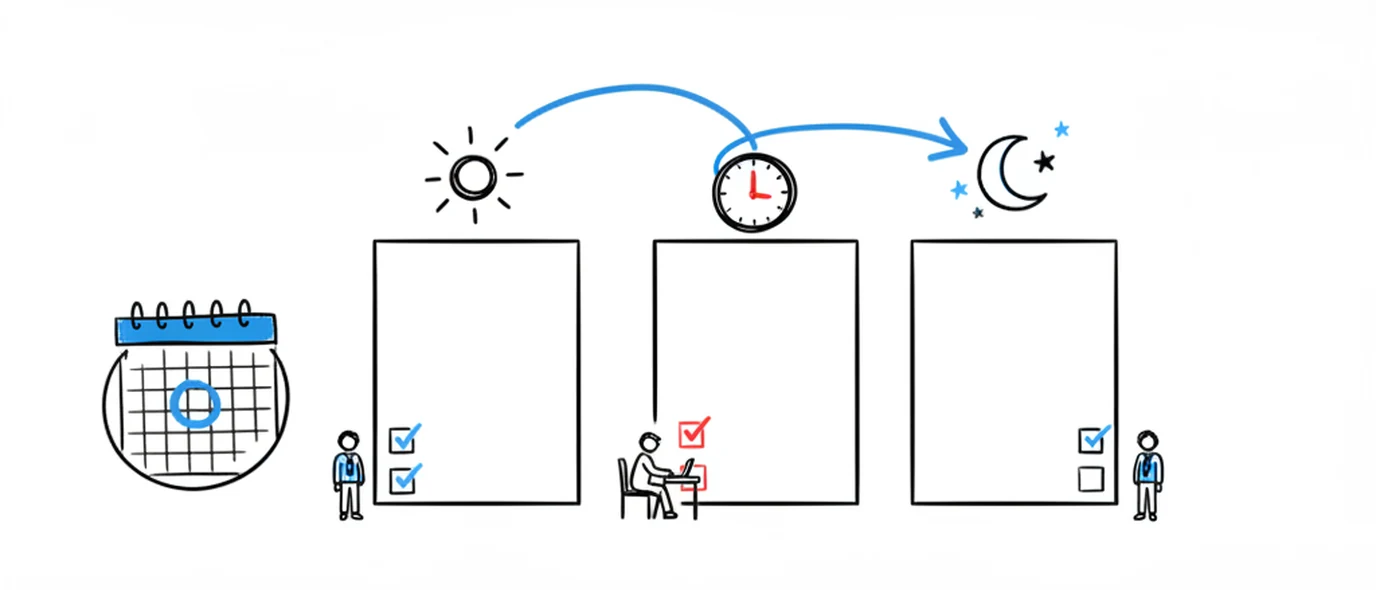
Three pages a day. No setup, no folders, no complexity. Just open it and write.